What Is Software?
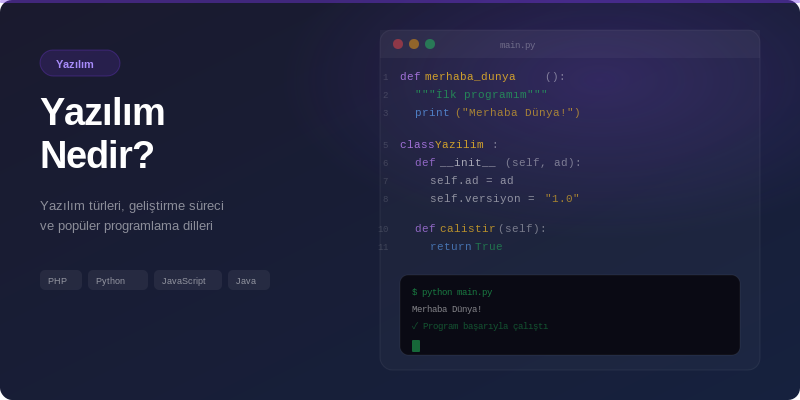
Software is the collection of instructions, data and programs that tell the hardware of a computer system what to do. Unlike hardware, software cannot be touched physically; it is a purely digital concept. Today, software is used everywhere, from phones to cars, from hospital devices to spacecraft.
History of Software
The term software was first used by mathematician John W. Tukey in 1958. However, its foundations go back much further, to the algorithms Ada Lovelace wrote in 1843 for Charles Babbage's Analytical Engine. Lovelace is regarded as the first programmer in history.
Types of Software
Software is generally divided into three main categories:
1. System Software
Software that manages the basic functions of a computer. Operating systems (Windows, Linux, macOS), device drivers and BIOS fall into this category. System software acts as a bridge between the hardware and the user.
2. Application Software
Programs that enable users to perform specific tasks. Web browsers, office suites, games, accounting software and mobile apps belong to this group.
3. Embedded Software
Software designed to run on a specific piece of hardware. Smart home devices, automotive control units and industrial machines use embedded software.
Software Development Process
Professional software development consists of certain stages:
- Analysis: Identifying needs and gathering requirements
- Design: Planning the system architecture and the user interface
- Coding: Developing the software using programming languages
- Testing: Detecting defects and quality control
- Deployment: Delivering the software to the end user
- Maintenance: Updates, bug fixes and improvements
Popular Programming Languages
The most widely used programming languages today are:
- Python: Artificial intelligence, data science and automation
- JavaScript: Web development and full-stack applications
- Java: Enterprise applications and Android development
- C#: Game development and desktop applications
- PHP: Server-side web development
- Go: High-performance server software
- TypeScript: Large-scale web applications
The Future of Software
Artificial intelligence, cloud computing and IoT (Internet of Things) technologies are rapidly transforming the software world. While low-code and no-code platforms make software development more accessible, AI-assisted coding tools are boosting developer productivity.
\"Everybody in this country should learn to program a computer, because it teaches you how to think.\" — Steve Jobs
Conclusion
Software is an indispensable part of the modern world. As technology advances, the importance and reach of software grow every day. Whether you see it as a career goal or a hobby, learning software is one of the most valuable skills in the digital age.